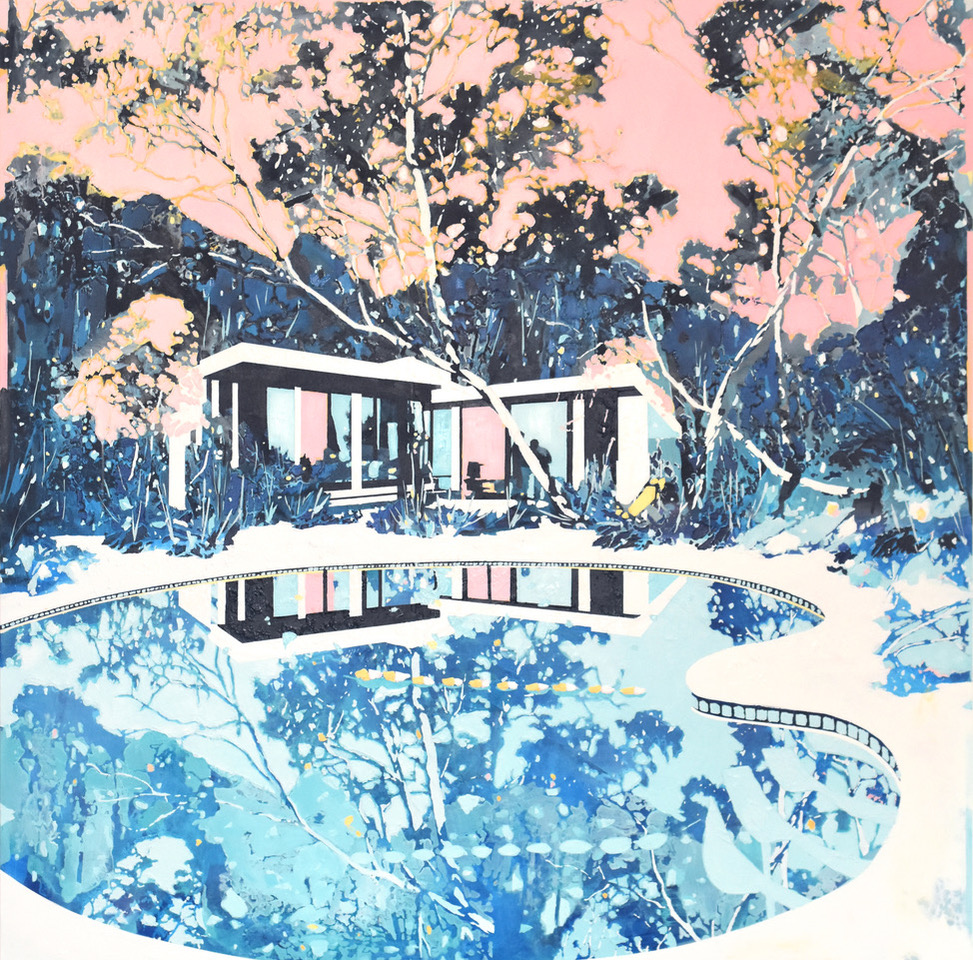
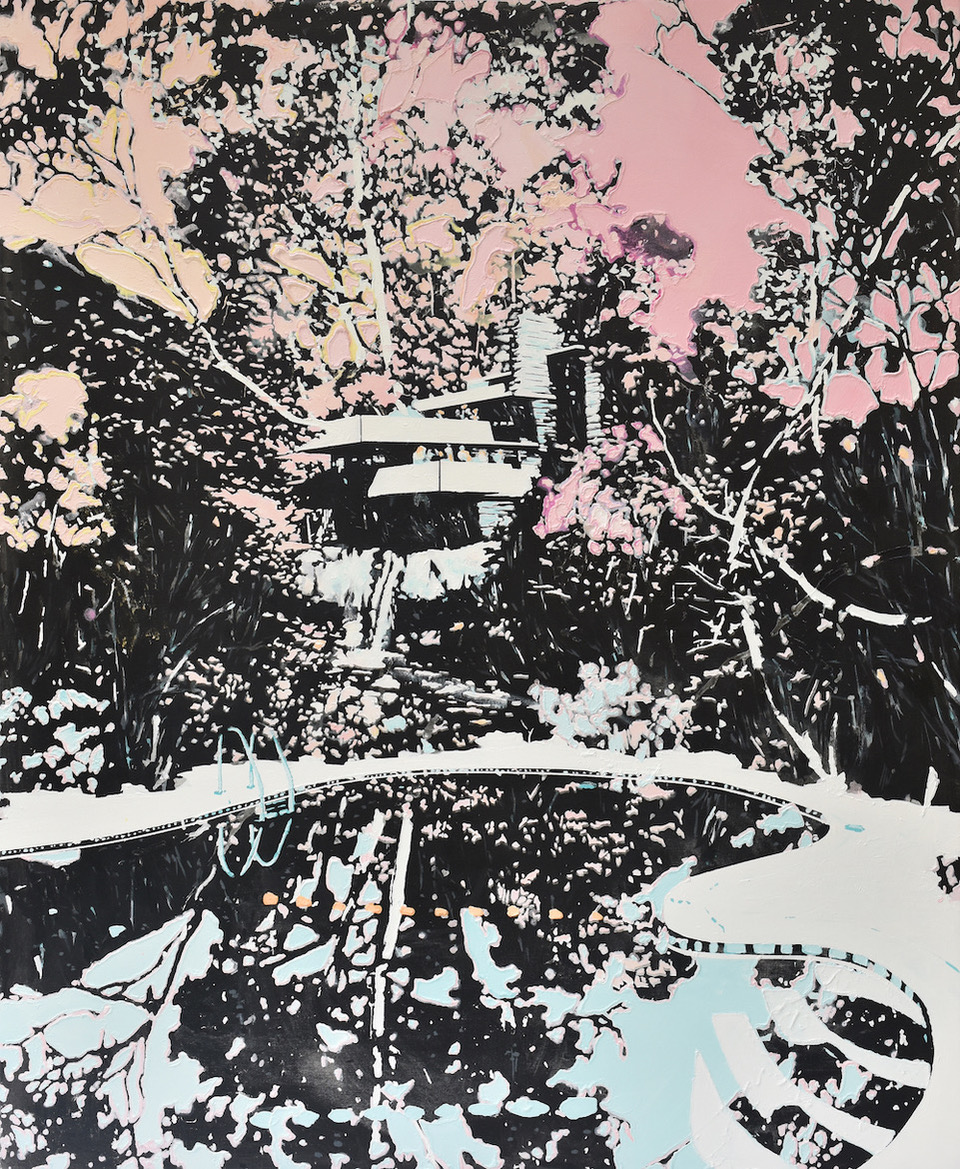
This is a review of Louis Bury’s article on Hyperallergic about Paul Davies’ paintings of California.
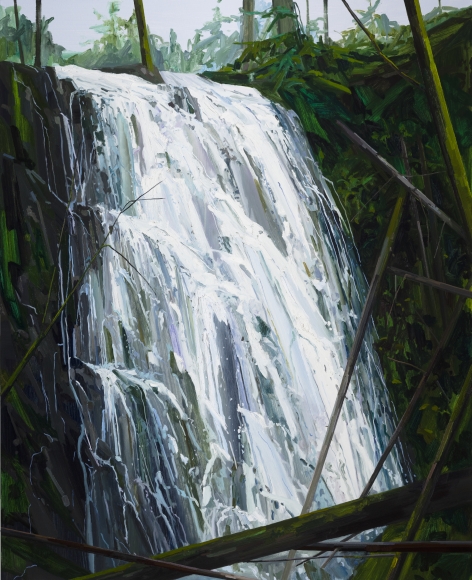
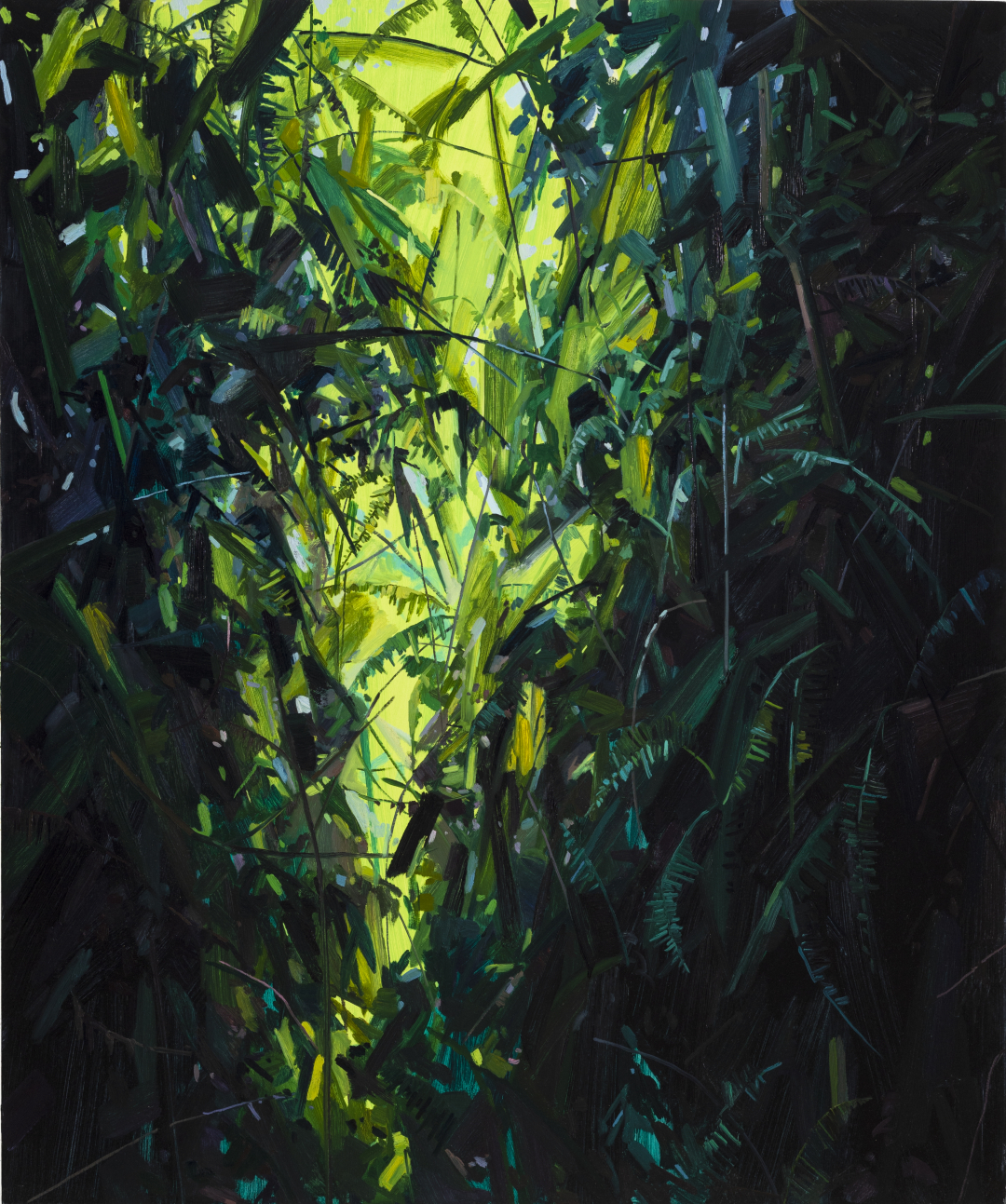
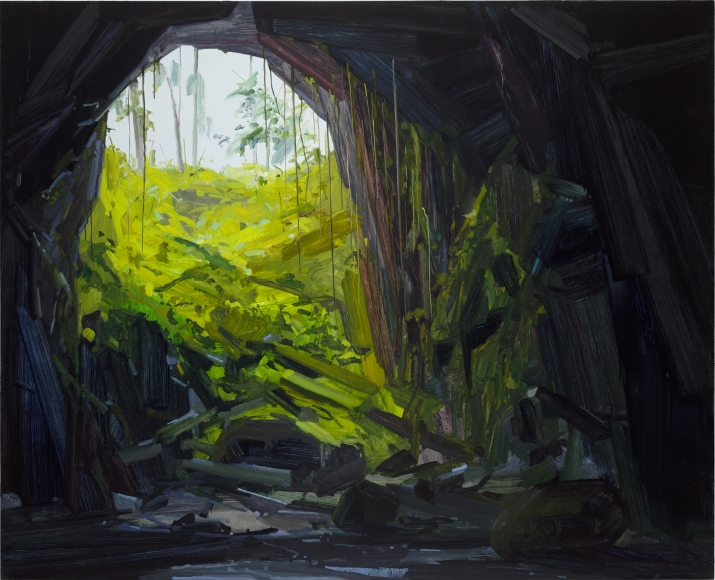
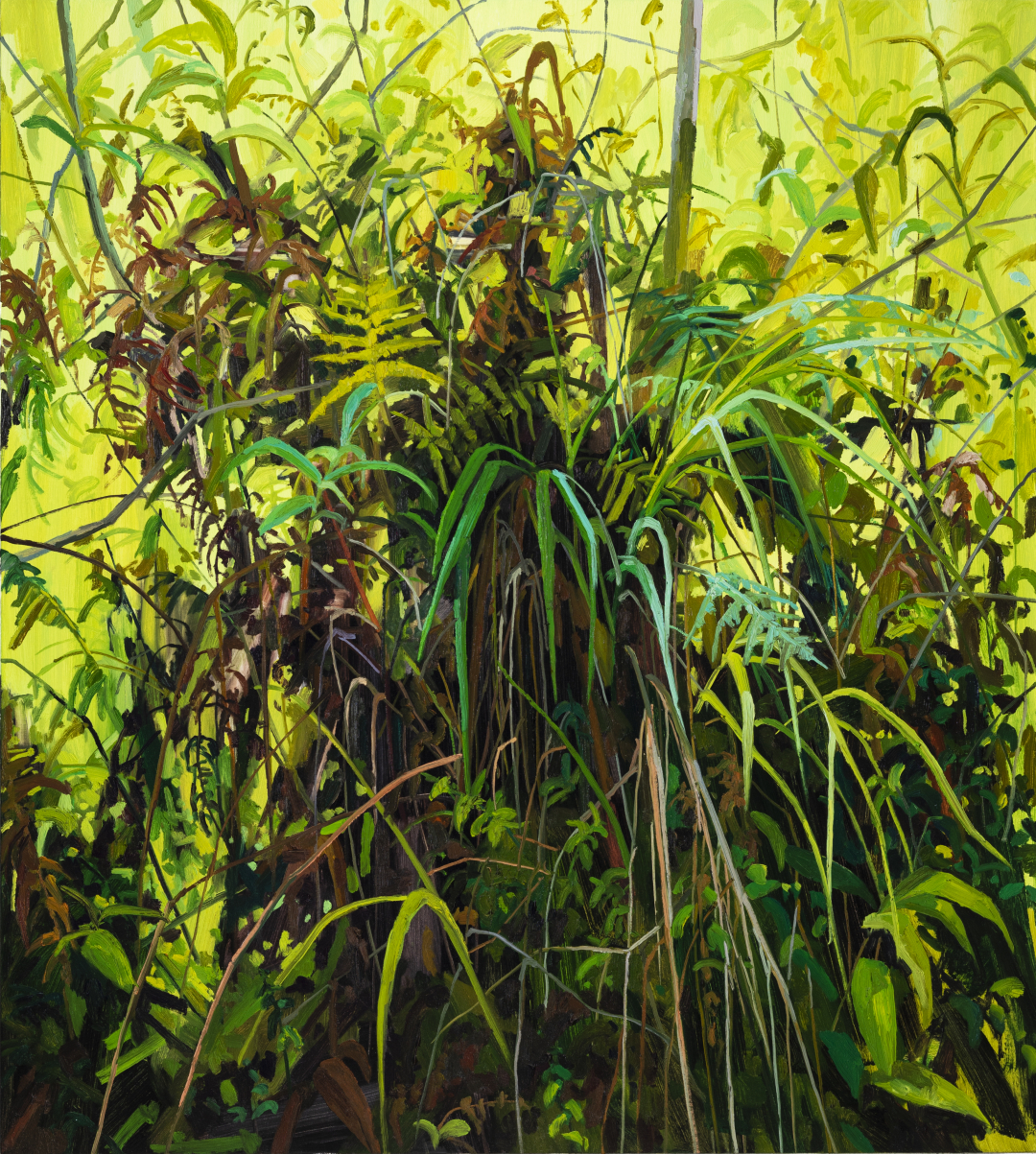
Paul Davies’ exhibition “The Roaring Daze” presented at Olsen Gruin showed a variety of fictional landscape paintings that Bury describes as “composites of the artist’s Australian heritage and adopted Los Angeles environs.” Both these environments are shown to influence the setting of his works. Despite how busy the paintings appear, there is still a sense of balance in the placement of objects. These paintings are have overall high key color schemes, contrasted by the dark colors of the foliage and shaded spaces of the trees and buildings. There are various other methods and techniques that Davies uses to create contrast in his works. For example, the paintings above seem to have a realistic quality to them like that of a photo, but techniques are used to deliberately create a somewhat abstracted feeling. The light, pastel pinks and blues enhance the idealistic beauty of the landscape, almost as if Davies is painting his vision of a paradise. However, Bury explains that the colors, techniques and objects that Davies uses have created tension between opposing concepts like nature and civilization, utopia and dystopia, and reality and fantasy. This tension creates an underlying feeling that this is not the paradise that it seems to be.
I recall reviewing another one of Bury’s articles previously, and have found that he shows great interest in the contrast that artists make in their works, through different themes in paintings, and even concepts coming from the artists’ means of creating their works. These contrasts he points out allow him to emphasize the effects created in the paintings, and help him to comprehensively explain his interpretations of the paintings. Of the two articles I reviewed by him, both were fairly representational; techniques were used to create a somewhat abstracted effect, but the objects in the paintings could be objectively seen. These paintings show appeal to both people outside of the “high” art world and within it as well. The objects in the paintings can easily be understood as they are, but deeper meaning can be found in them through analysis.


 ARTT127 Reviews